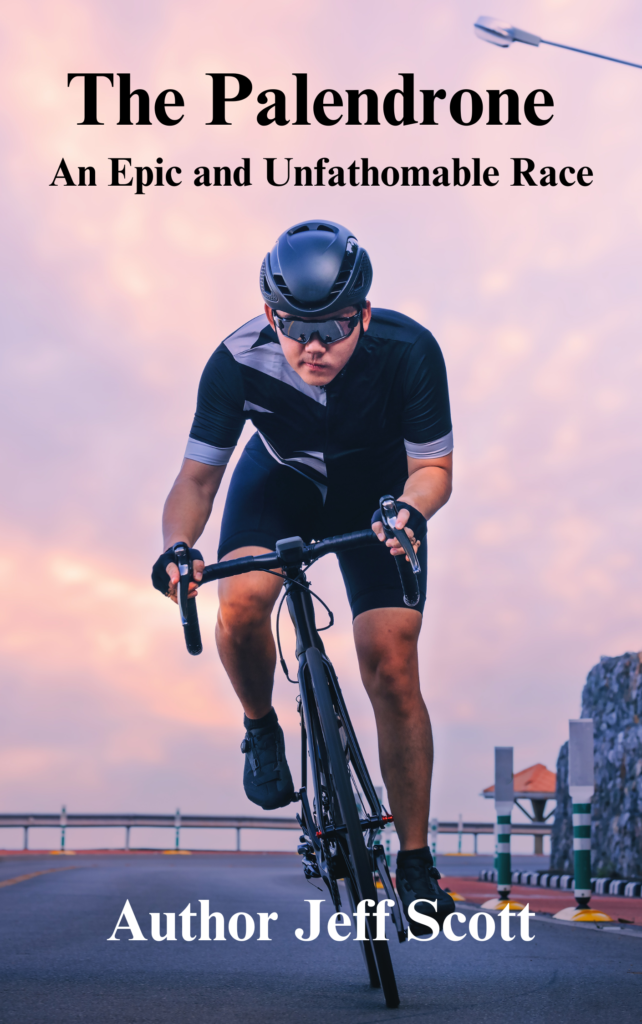
To start I must say Thank You! For letting me read The Palendrone. I love love
love it. This is so publishable. I would very much like to see you try for an agent and get a publisher for a wide distribution. For one thing it is extremely well written, creative, unique and just all-around good storytelling. There were many unexpected twists and turns and a great deal of inspiration. Even for myself recovering from a stroke Robert’s discipline inspires me. I had no idea that you had this kind of knowledge on the cycling subject but it feels so authentic. Each character is well drawn and has their own voice. You have mastered the art of dialogue which all feels very natural. Love Peleton’s wisdom and character very much. Also Joe and Robert's dad. It kept me reading from page to page and each black moment took me by surprise.
It’s like the wise old man in you is in an eternal dialogue with the young open seeker in you. Bravo!

Joanne Parks
Author of Spiritual Real Estate
I'm a trainer and have helped a few tri-athletes. After reading, The Palendrone, I took a hard look at how to draw out fears a few clients didn't realize were holding them back. The book deals with fear of commitment and I always thought that was about realationships... but it's so much more. Props to author Jeff Scott for telling a story in such a way that I learned how to spot my own inhibitions and how to not only "train the brain," but to also break the brain from subconscious defaults.
John J
Certified Trainer