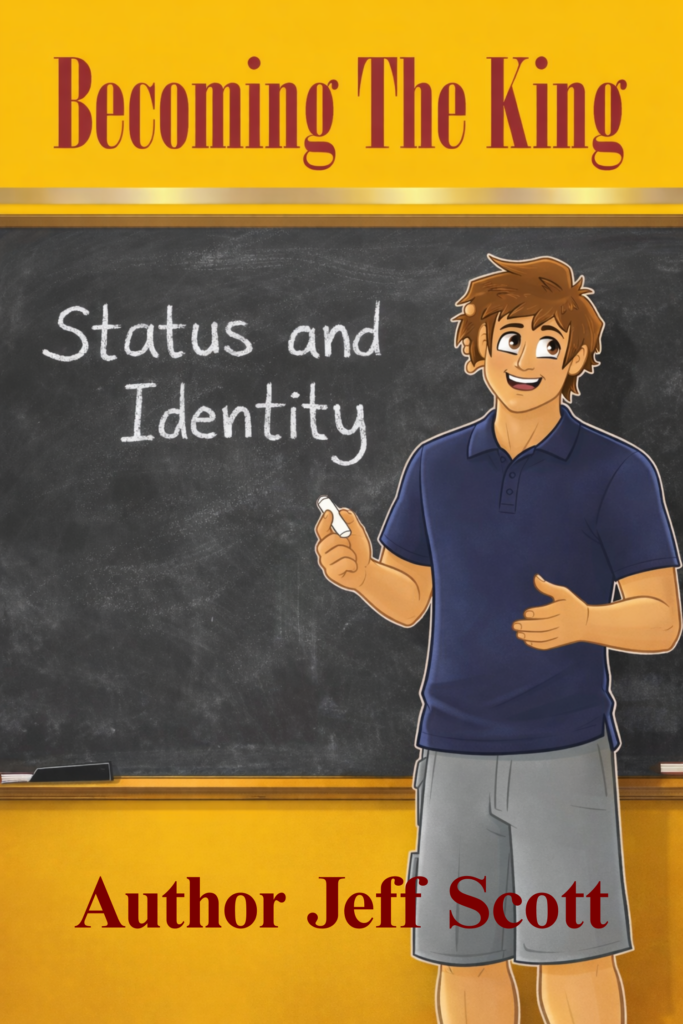
Charlie is fourteen, almost fifteen, and enrolled in a ten day summer school class he assumes will be forgettable.
It isn’t.
High school is already organizing itself around status. Athletes. Social circles. Performers. Invisible kids. Everyone feels it, even when no one names it.
Charlie narrates the story from the inside, not as an expert, but as someone trying to understand his own place in it. Raised by a single mother, he watches the hierarchy of high school form around him and begins to question whether popularity, dominance, or rebellion actually define strength.
At the center of his world are siblings Chris and Ronnie.
Chris is the confident football player who seems to move easily through the social structure. Ronnie, his driven track star sister, sees things differently. Through their friendship, Charlie witnesses two distinct expressions of status, one physical and visible, the other disciplined and internal. Their conversations, tensions, and loyalty give the classroom ideas real life consequences.
Inside a short but intense summer class, boys and girls are challenged to confront questions most teenagers avoid:
What is status, really?
Who assigns it?
Is it earned, performed, or borrowed?
And what happens if you build your identity on something that can disappear overnight?
Over ten days, assumptions crack. Quiet students speak. Confident ones hesitate. Charlie begins to understand that if he does not define himself, the crowd will do it for him.
Becoming the King is not a lecture about growing up.
It is a narrative exploration of identity in motion. A story where both boys and girls see themselves reflected. A story about friendship, pressure, loyalty, insecurity, ambition, and the quiet decision to mature on purpose.
Because becoming a king does not begin with dominance.
It begins with knowing who you are before the world tells you who to be.